
Why Billion-Dollar Startups Are Struggling While Profitable Businesses Thrive
Introduction
For much of the last decade, the startup world operated under a simple mantra:
Grow first. Profit later.
Investors rewarded companies that could acquire users rapidly, expand into new markets, and demonstrate explosive growth—even if profitability remained years away.
This approach created an era of billion-dollar startups, often called "unicorns," that achieved extraordinary valuations despite generating little or no profit.
Today, the landscape has changed dramatically.
Many once-celebrated unicorns are cutting costs, laying off employees, delaying expansion plans, and facing pressure from investors. Meanwhile, thousands of profitable businesses—many operating far from the spotlight—are thriving.
The shift reflects a fundamental change in how businesses are valued, funded, and judged in an era of higher interest rates, economic uncertainty, and investor caution.
The question is no longer how fast a company can grow.
The question is whether it can generate sustainable profits.
The Age of Easy Money
To understand today's challenges, it is important to revisit the conditions that fueled the startup boom.
Following the 2008 financial crisis, interest rates remained historically low across much of the world.
Investors searching for higher returns poured money into:
Technology startups
Venture capital funds
Growth companies
Private markets
Capital became abundant and relatively inexpensive.
As a result, startups could raise enormous amounts of money even when profitability seemed distant.
Many companies embraced a strategy of:
Aggressive hiring
Market expansion
Customer acquisition
Subsidized pricing
Growth at all costs
The goal was to dominate markets before competitors could catch up.
For years, this strategy appeared successful.
The Unicorn Explosion
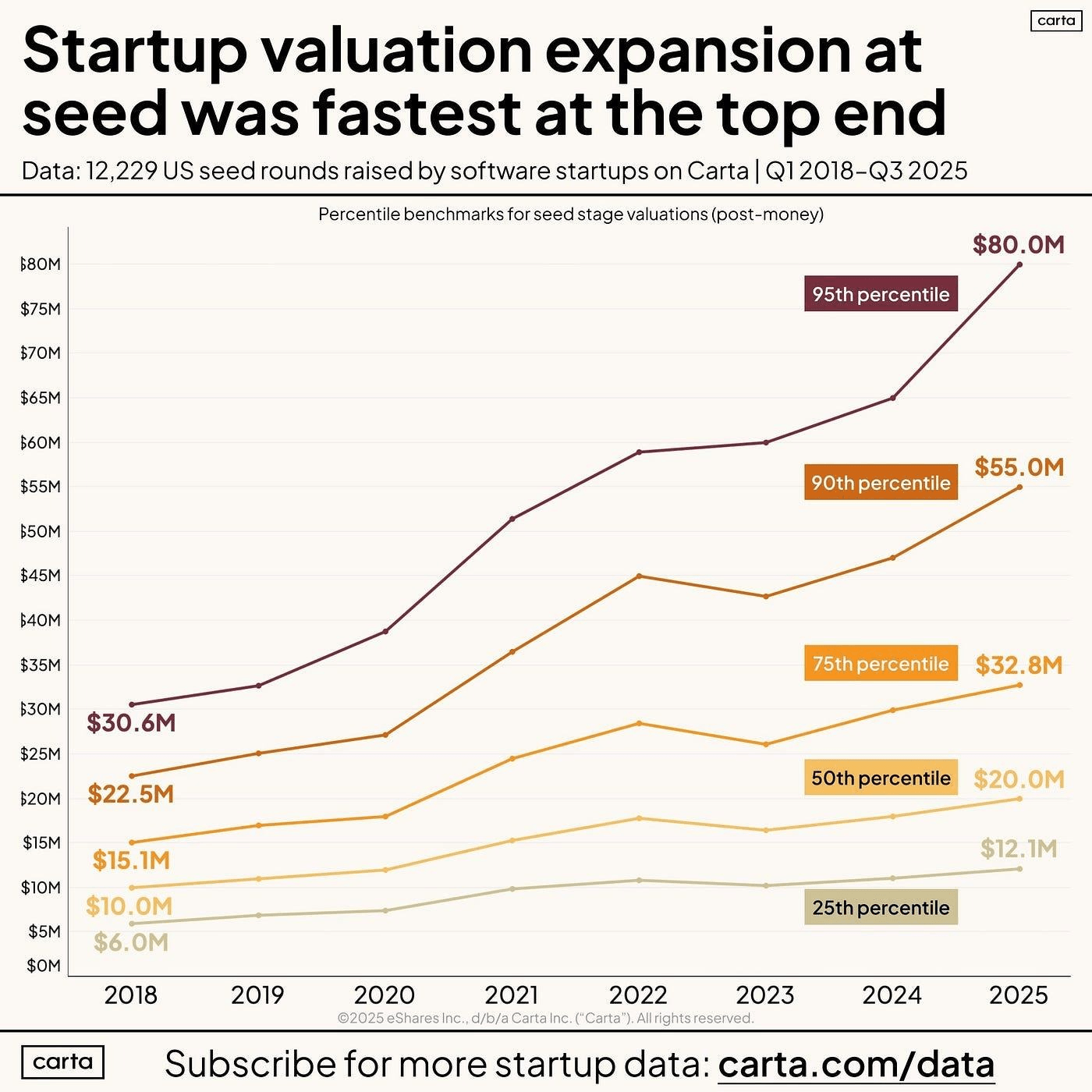
The term "unicorn" refers to startups valued at more than $1 billion.
Over the last decade, the number of unicorns surged globally.
Companies achieved billion-dollar valuations in sectors such as:
Technology
Fintech
E-commerce
Mobility
Software
Artificial Intelligence
Valuations often reflected future potential rather than current financial performance.
Investors focused on metrics like:
User growth
Revenue growth
Market share
Customer acquisition
Profitability frequently took a back seat
What Changed?
Several powerful forces transformed the investment environment.
1. Higher Interest Rates
Perhaps the biggest shift has been the rise in global interest rates.
When interest rates are low:
Future earnings appear more valuable.
Investors are willing to wait longer for returns.
Risk-taking increases.
When rates rise:
Capital becomes more expensive.
Investors become more selective.
Immediate cash flow gains importance.
Suddenly, companies promising profits ten years from now became less attractive than businesses generating profits today.
2. Venture Capital Became More Cautious
The venture capital industry also changed.
Investors increasingly ask:
Can the business generate cash?
How quickly can it become profitable?
Is growth sustainable?
What happens if funding dries up?
The era of unlimited funding rounds largely disappeared.
Many startups that relied heavily on external capital found themselves under pressure.
3. Economic Uncertainty
Inflation, geopolitical tensions, supply-chain disruptions, and slower growth created uncertainty.
Investors began prioritizing resilience over ambition.
Businesses capable of generating stable cash flows became more attractive than speculative growth stories.
It Requires
Continuous access to funding
Strong investor confidence
Expanding markets
Favorable economic conditions
When those conditions weaken, problems emerge.
Some startups discovered that:
Customer acquisition costs were too high.
Profit margins were too thin.
Business models were difficult to scale profitably.
Growth alone could no longer mask structural weaknesses.
The Growth-at-All-Costs Problem
Many unicorns were built around a simple assumption:
Future growth would eventually justify present losses.
This strategy works only under certain conditions.
It Requires
Continuous access to funding
Strong investor confidence
Expanding markets
Favorable economic conditions
When those conditions weaken, problems emerge.
Some startups discovered that:
Customer acquisition costs were too high.
Profit margins were too thin.
Business models were difficult to scale profitably.
Growth alone could no longer mask structural weaknesses.
Why Profitable Businesses Are Winning Again





Profitable businesses are benefiting from a changing economic environment.
Predictable Cash Flow
Profit-generating companies rely less on external funding.
They can:
Reinvest earnings
Expand gradually
Weather downturns
Financial independence provides flexibility.
Lower Risk
Investors increasingly value businesses with:
Proven demand
Sustainable margins
Consistent earnings
These characteristics reduce uncertainty.
Operational Discipline
Profitable companies often develop stronger fundamentals because they cannot rely indefinitely on investor capital.
They must focus on:
Efficiency
Customer retention
Cost management
Product quality
These disciplines often create more durable businesses.
The Return of Business Fundamentals
The market is rediscovering principles that have existed for decades.
Successful companies generally need:
Strong Unit Economics
Every customer should eventually generate more value than it costs to acquire them.
Sustainable Revenue
Revenue should be repeatable and predictable.
Healthy Margins
Profitability requires sufficient margins to absorb economic shocks.
Efficient Growth
Growth remains important, but growth that destroys value is no longer rewarded.
Businesses that excel in these areas are increasingly attracting investor attention.
Industries Feeling the Pressure
Certain sectors have been particularly affected by changing market conditions.
Venture-Funded Consumer Startups
Many consumer-focused businesses spent heavily to acquire users.
As funding becomes scarcer, profitability concerns have intensified.
E-Commerce
Competition and rising customer acquisition costs have challenged many online retailers.
Only businesses with strong differentiation and operational efficiency continue to thrive.
Mobility and Delivery Platforms
Companies that relied on subsidies to drive growth have faced increasing pressure to demonstrate sustainable economics.
Industries Benefiting From the Shift
Enterprise Software
Businesses selling mission-critical software often enjoy:
Recurring revenue
High retention rates
Strong margins
These characteristics are highly attractive in uncertain markets.
Industrial Businesses
Manufacturing, logistics, and infrastructure-related companies continue to benefit from real-world demand and tangible cash flows.
Niche Market Leaders
Many smaller businesses dominate specialized markets without attracting media attention.
These firms often generate impressive profits despite modest valuations.
The Hidden Success Stories
One of the most interesting outcomes of the current environment is the growing appreciation for businesses that were previously overlooked.
Many profitable companies:
Never raised venture capital
Grew steadily over years
Focused on customers rather than valuations
Prioritized profitability from day one
While they may not achieve billion-dollar headlines, they often create substantial long-term value.
In many cases, founders retain greater ownership and control compared to heavily funded startups.
The New Investor Mindset
Investor priorities are evolving.
Yesterday's Questions
How fast is the company growing?
How many users does it have?
How large is the market opportunity?
Today's Questions
Is the business profitable?
Can it survive without additional funding?
Does it generate free cash flow?
Are customers willing to pay sustainable prices?
Growth remains important, but profitability has regained prominence.
Does This Mean Unicorns Are Finished?
Challenges
Absolutely not.
Many billion-dollar startups continue to build transformative businesses.
Some sectors still require significant upfront investment, including:
Artificial Intelligence
Biotechnology
Clean Energy
Advanced Manufacturing
In these industries, long-term growth opportunities remain enormous.
However, investors increasingly expect a credible path to profitability rather than growth alone.
The rules have changed.
What Entrepreneurs Can Learn
The current environment offers several important lessons.
Build Sustainable Business Models
Growth should strengthen the business, not weaken it.
Focus on Customer Value
Customers not investors ultimately determine long-term success.
Prioritize Cash Flow
Profitability creates resilience.
Avoid Overdependence on Funding
External capital can accelerate growth, but it should not become a substitute for sound economics.
Looking Ahead: The Future of Entrepreneurship
The next generation of successful companies may look different from the unicorns of the last decade.
Future winners are likely to combine:
Innovation
Sustainable growth
Operational efficiency
Strong cash flow
Clear profitability pathways
Rather than choosing between growth and profits, the most successful businesses will pursue both.
The market is increasingly rewarding companies that can demonstrate durable value creation rather than speculative potential.
Conclusion
The struggles of many billion-dollar startups and the success of profitable businesses reflect a broader shift in economic conditions and investor expectations.
The era of cheap capital encouraged rapid expansion, ambitious valuations, and growth-at-all-costs strategies. Today's environment demands greater financial discipline, operational efficiency, and sustainable economics.
Profitability has not become fashionable again because growth is unimportant. It has become important because profitability proves that a business can survive, adapt, and create lasting value.
For entrepreneurs, investors, and business leaders, the lesson is clear: valuations may capture attention, but profits build endurance.
In the long run, the companies that balance ambition with sustainability are most likely to thrive regardless of whether they are worth $1 billion or $100 billion.