
The Great AI Workforce Reshuffle: Are Layoffs Temporary or Structural?
Over the past two years, headlines have been dominated by waves of layoffs across technology, finance, media, and professional services. At first glance, many of these workforce reductions appeared to be a correction after aggressive post-pandemic hiring. Yet as artificial intelligence (AI) capabilities continue to advance, a deeper question is emerging: are these layoffs merely cyclical, or are they the early signs of a structural transformation in the global workforce?
The answer lies somewhere in between. While economic slowdowns and cost-cutting measures have certainly contributed to job losses, AI-driven automation is increasingly reshaping how organizations think about talent, productivity, and workforce planning. What we are witnessing may not simply be a temporary downturn but the beginning of a profound workforce reshuffle.
The Global Layoff Wave: More Than a Market Correction
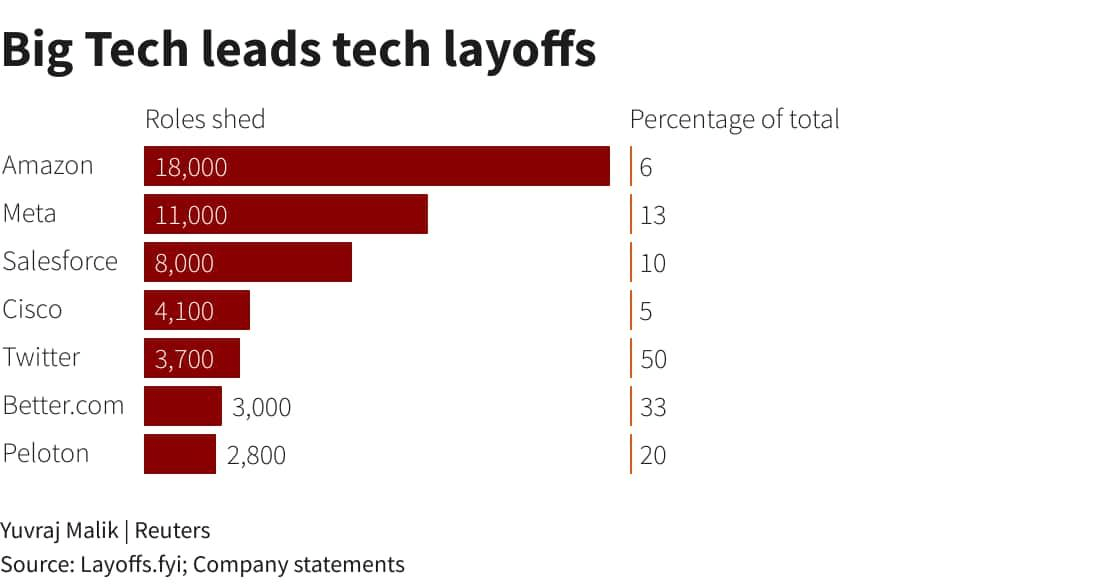
Since 2022, hundreds of thousands of workers have been laid off worldwide. Major technology companies, once known for relentless hiring, have reduced headcounts significantly. Financial institutions, media organizations, and consulting firms have followed suit.
Initially, these cuts were attributed to slowing economic growth, inflationary pressures, and overhiring during the pandemic boom. However, as generative AI tools became more capable, many executives began openly discussing automation as a means to improve efficiency and reduce labor costs.
Organizations are increasingly asking a fundamental question: if AI can perform certain tasks faster, cheaper, and at scale, how many employees are needed to accomplish the same work?
This shift marks a departure from traditional technology adoption. Previous waves of automation primarily affected repetitive physical labor. Today's AI systems are targeting cognitive tasks that were once considered uniquely human.
Why AI Is Different From Previous Automation Waves
Historically, technological revolutions displaced some jobs while creating entirely new industries. The Industrial Revolution reduced demand for manual labor in agriculture but generated factory employment. The internet disrupted traditional retail while creating digital commerce and software industries.
AI differs because it can automate knowledge work itself.
Modern AI systems can:
Draft reports and presentations
Generate marketing content
Analyze large datasets
Write software code
Handle customer service inquiries
Conduct research and summarization
Assist with legal and administrative documentation
Instead of replacing entire occupations overnight, AI is automating specific tasks within jobs. However, when enough tasks are automated, organizations often require fewer workers to achieve the same output.
As a result, many companies are not eliminating entire departments but restructuring teams around AI-enhanced workflows.
The Most Vulnerable Jobs
Not all occupations face equal risk. Jobs are most vulnerable when they involve predictable, repetitive, and information-based tasks that can be standardized.

Administrative and Clerical Roles
Administrative assistants, data entry operators, scheduling coordinators, and document-processing professionals are among the most exposed. AI systems can manage calendars, organize information, generate documents, and process routine requests with increasing accuracy.
Customer Support
AI-powered chatbots and virtual assistants now handle a growing percentage of customer interactions. While complex cases still require human intervention, routine support functions are becoming increasingly automated.
Content Production
Basic copywriting, product descriptions, routine journalism, and standard marketing content are already being generated by AI tools. Human oversight remains necessary, but fewer employees may be needed for high-volume content production.
Junior Software Development
While AI is unlikely to replace software engineers entirely, coding assistants are significantly improving productivity. Companies may require fewer entry-level developers for routine coding tasks, potentially altering traditional career pathways.
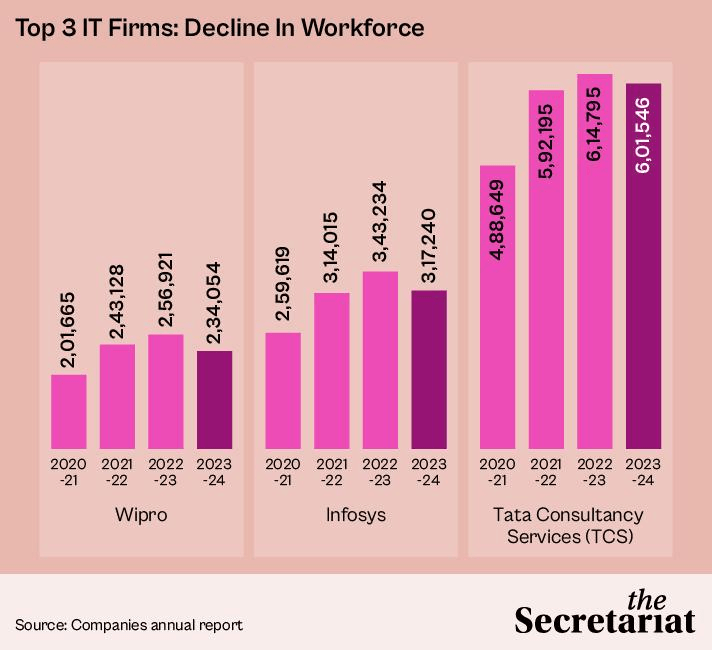
Back-Office Processing
Functions such as claims processing, bookkeeping support, document review, and compliance reporting are increasingly being streamlined through AI-enabled automation.
The Most Resilient Jobs
Despite concerns about widespread displacement, many occupations remain highly resilient because they depend on skills AI struggles to replicate.
Healthcare Professionals
Doctors, nurses, therapists, and caregivers rely on empathy, trust, judgment, and interpersonal interaction. AI can support diagnosis and administration but cannot fully replace human care.
Skilled Trades
Electricians, plumbers, mechanics, construction specialists, and technicians operate in dynamic physical environments that remain difficult to automate economically.

Leadership and Strategic Management
Senior leaders make decisions under uncertainty, navigate organizational politics, manage stakeholders, and provide vision. These responsibilities require nuanced judgment beyond current AI capabilities.
Creative and Innovation-Focused Roles
While AI can generate ideas, breakthrough innovation often comes from combining domain expertise, intuition, cultural understanding, and human creativity. Designers, product strategists, and creative directors continue to play critical roles.
Relationship-Driven Professions
Sales executives, business development professionals, consultants, and negotiators depend heavily on trust-building and interpersonal dynamics. AI may enhance productivity but is unlikely to replace the human element entirely.
From Job Replacement to Job Redesign
Perhaps the most important trend is not outright job elimination but job redesign.
Many organizations are moving toward a model where AI handles routine work while employees focus on higher-value activities. For example:
Marketers spend less time drafting content and more time on strategy.
Lawyers spend less time reviewing documents and more time advising clients.
Analysts spend less time gathering data and more time interpreting insights.
Developers spend less time writing boilerplate code and more time solving complex problems.
In this scenario, workers who successfully integrate AI into their workflows become significantly more productive. The risk falls on those whose roles remain centered on tasks that can be automated
The Emerging Workforce Divide
The AI transition may create a new divide in the labor market.
On one side are workers who use AI as a productivity amplifier. These individuals can produce more output, learn faster, and manage increasingly complex responsibilities.
On the other side are workers whose value proposition is based primarily on routine execution. As automation improves, demand for these roles may gradually decline.
This suggests that future employability may depend less on specific technical skills and more on adaptability, continuous learning, and the ability to collaborate effectively with AI systems.
Temporary Downturn or Structural Shift?
The current wave of layoffs contains elements of both.
Some job losses are undoubtedly cyclical. Economic conditions will improve, business investment will rebound, and hiring will return in many sectors.
However, the broader trend appears structural. AI is changing the economics of work, allowing companies to generate more output with leaner teams. Organizations are increasingly redesigning workflows around automation, and these changes are unlikely to reverse even when economic conditions strengthen.
The question is no longer whether AI will affect employment—it already is. The more important question is how workers, businesses, and governments adapt to a future in which human labor and artificial intelligence increasingly operate side by side.
Conclusion
The Great AI Workforce Reshuffle is not a singular event but an ongoing transformation. While fears of mass unemployment may be overstated, assumptions about lifelong job security are becoming harder to sustain.
The workers who thrive in the coming decade will not necessarily be those who compete against AI. Instead, they will be those who learn how to work alongside it, leveraging automation to enhance uniquely human strengths such as creativity, empathy, judgment, leadership, and innovation.
The future of work is unlikely to be fully human or fully automated. It will belong to those who can successfully combine the capabilities of both.